Maritime Paths, Headland Ecology & Local Culture
A lighthouse stay extends far beyond the station compound. We guide you through the ancient footpaths, fragile cliff ecosystems, and maritime traditions that surround these headland bastions.
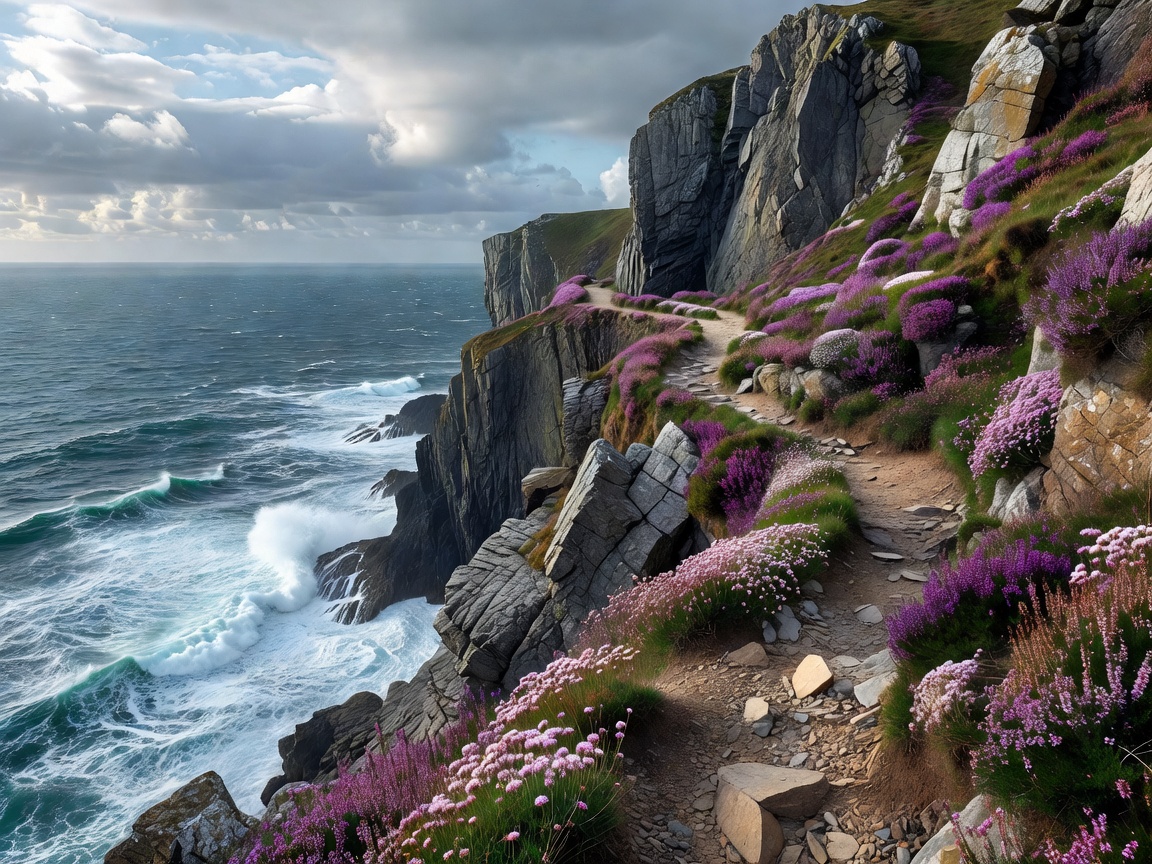
The Ancient Network of Coastal Watch Paths
Virtually every European lighthouse station sits at the nexus of historic maritime paths. Long before recreational hiking trails were mapped, these tracks were forged by customs officers, coastguards, and shipwreck salvors patrolling the edge of the land. In Britain, France, Spain, and Portugal, these routes have evolved into premier long-distance walking paths—such as the South West Coast Path, the Sentier des Douaniers (GR34) in Brittany, and the Camiño dos Faros in Galicia.
When staying at a lighthouse, your front door opens directly onto these dramatic arteries. You can step out at sunrise to walk three or four miles along the cliff edge before encountering a single other human being. The trail becomes an extension of your living room, inviting daily morning walks to check the tide line, spot passing grey seals, and observe offshore maritime traffic.
Headland Ecology: Life on the Saline Frontier
The narrow margin where land meets the open ocean is one of the most ecologically demanding environments on Earth. Flora inhabiting the cliffs around lighthouse stations have developed extraordinary adaptations to survive constant salt-laden winds, thin acidic soils, and periodic storm immersion.
Walking the paths, you encounter resilient maritime carpets of sea thrift (Armeria maritima), scurvygrass, rock samphire, and dwarf gorse. In late spring and early summer, windswept headlands ignite with pink, yellow, and deep purple blossoms that hum with wild bees and coastal butterflies.
Observing Coastal Wildlife Mindfully
Headlands are critical habitats for marine mammals and bird populations. To maintain safe and ethical observation during your retreat:
- Pelagic Bird Colonies: Maintain at least 20 meters from cliff nesting ledges to avoid flushing parent birds from eggs or fledglings.
- Haul-Out Sites for Seals: Grey and harbour seals frequently rest on rocky kelp reefs beneath lighthouse points. Never approach seals on foot; use high-magnification binoculars or telephoto optics.
- Cetacean Spotting: Headlands protruding into deep water create natural upwellings of nutrients that attract harbour porpoises, minke whales, and dolphins. Set up a spotting scope on the station terrace during calm morning seas.
The Culture of Neighboring Fishing Havens
While lighthouses provide supreme isolation, they rarely exist in complete detachment from local maritime communities. Down in the sheltered cove or tidal inlet two or three miles behind the cape, you will inevitably find a working harbour that has sustained fishing families for centuries.
Visiting these small quaysides grounds your lighthouse stay in authentic coastal life. Here, you can purchase fresh crab, mackerel, or langoustines straight from day-boats returning at low tide. Striking up conversations with local harbourmasters and fishermen yields deep insights into local weather patterns, sunken wrecks, and the changing seasonal tides that no tourist pamphlet could ever capture.
The Nocturnal Landscape and Dark-Sky Preservation
Because lighthouses were deliberately placed on the outermost fringes of the land, far removed from industrial development and municipal sprawl, they are among the premier dark-sky locations in Europe.
Stepping out onto the station compound at midnight reveals a cosmic canvas of staggering depth. The Milky Way arches from horizon to horizon, mirrored below by the rhythmic, golden flash of the beacon lantern slicing through the darkness. It is a dual perspective: looking inward toward human navigational ingenuity, and looking outward toward the infinite depths of the sea and stars.